
Polyhedron Pitch Delay
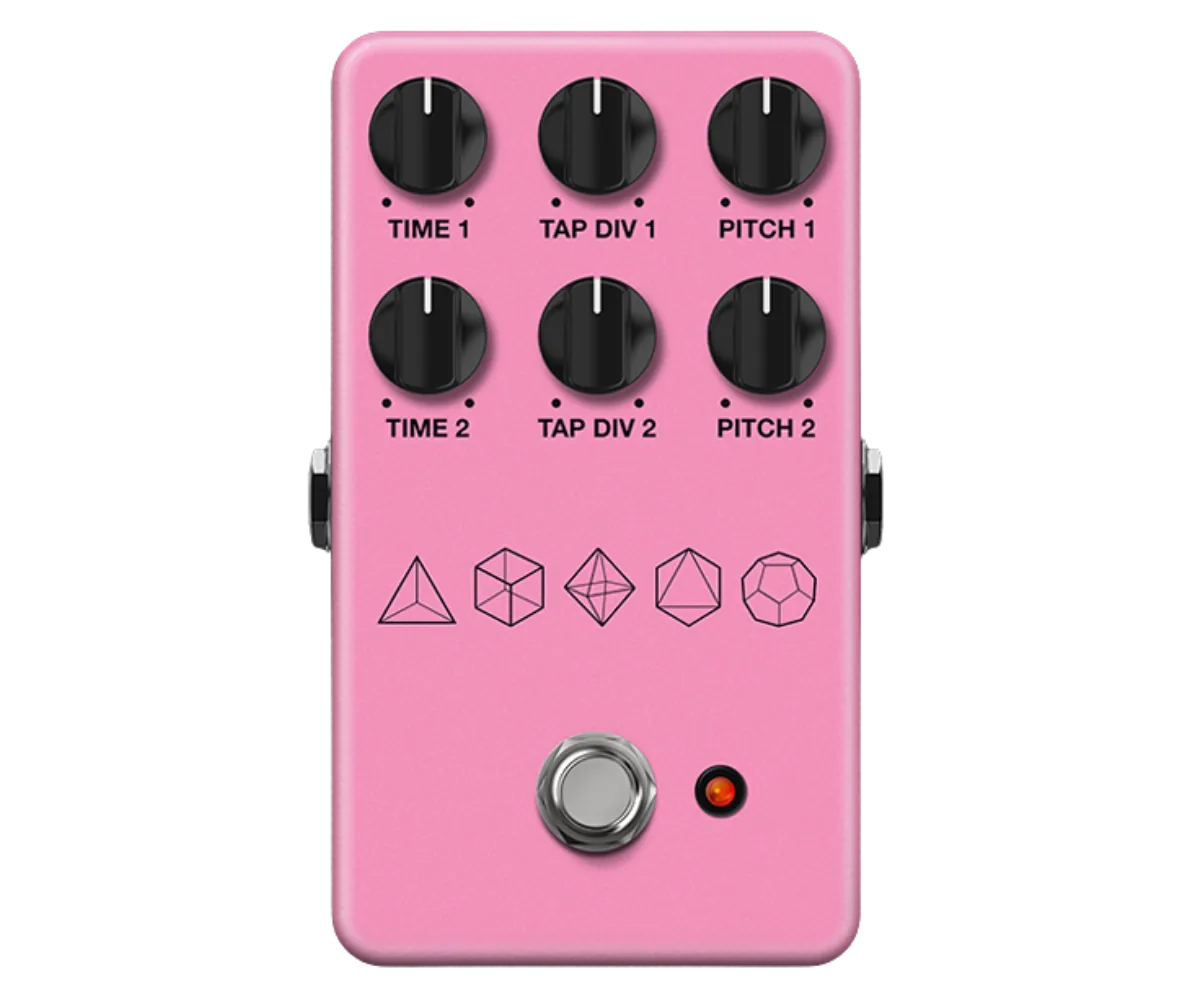
The Polyhedron Pitch Delay is a unique digital effect found exclusively in the Fender Tone Master Pro multi-effects unit. It combines pitch shifting and delay, allowing users to create harmonized echoes and complex, layered soundscapes. The effect enables precise control over pitch intervals, delay time, feedback, and mix, making it suitable for both subtle doubling and experimental, ambient textures. Its integration within the Tone Master Pro platform ensures high-quality processing and flexible routing options for creative sound design.
Fender Model Guide
Combines two independent pitch-shifting delay lines to create layered harmonies, cascading echoes and expansive stereo textures. Flexible routing, interval control and feedback shaping make it possible to build everything from subtle spatial enhancement to complex ambient soundscapes.
- TIME 1 Adjusts time before first repeat is heard of first delay.
- TAP DIVISION 1 Synch delay Time 1 to the beat by selecting a subdivision of current tempo.
- PITCH 1 Adjusts pitch value in half-steps for Time 1.
- TIME 2 Adjusts time before first repeat is heard of second delay.
- TAP DIVISION 2 Synch delay Time 2 to the beat by selecting a subdivision of current tempo.
- PITCH 2 Adjusts pitch value in half-steps for Time 2.
- MIX Adjusts pitch/delay effect level.
- FEEDBACK Adjusts number of delay repeats.
- ATTACK Adjusts delay/pitch swell effect timing.
- SPREAD Adjusts stereo effect width.
- CRYSTALLIZE Routes delay feedback through pitch shifter for cascading shifted echoes.
- LO FI Increases amount of sonic degradation to both delay repeats.
- SPILLOVER Select to continue hearing delay repeats after effect has been bypassed.
From the Fender Tone Master Pro Model Guide
- Based on
- Tone Master Pro Exclusive Polyhedron Pitch Delay
- Effect type
- Delay
- Real gear released
- 2025
Unofficial fan reference by Worship Calling. Not affiliated with or endorsed by Fender. Tone Master Pro is a trademark of Fender Musical Instruments Corporation. Other product names belong to their owners and are used only to identify the gear each model is based on. Details are a guide, so check the Fender manual for exact controls.